Do bitter herbs increase or reduce appetite? The honest answer is that bitterness alone cannot predict the outcome. The specific compound, amount, delivery route, timing, formula, and individual response all matter. Human research remains limited and inconsistent. HerbEra is best considered here as a label example, not as evidence that a bitter formula will change appetite.
This guide explains why traditional appetite formulas and modern satiety products may both contain bitter compounds. It also shows you how to compare labels without assuming that every bitter herb works in the same way.
Can bitter herbs increase and reduce appetite?
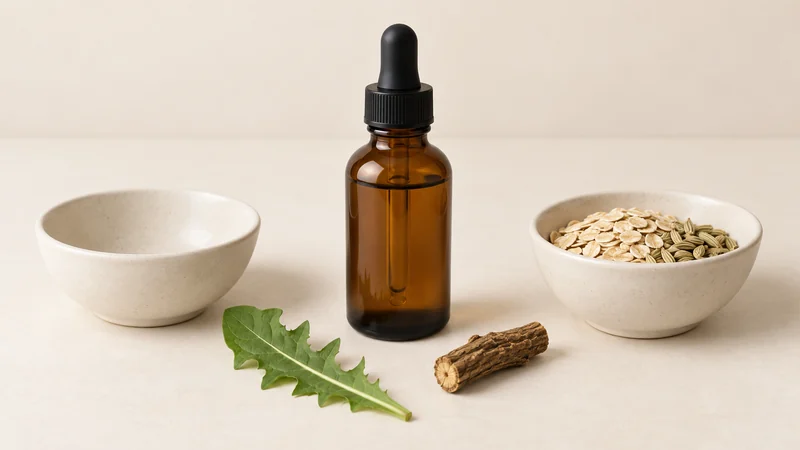
Bitter products may be positioned for either purpose, but a bitter taste does not guarantee an increase or reduction in appetite. Traditional herbal practice often places bitter formulas before meals. Some modern research instead examines isolated bitter compounds delivered directly to the gastrointestinal tract. These are different uses and should not be treated as equivalent.
Context | What the user experiences | Typical product positioning | What the evidence does not establish |
|---|---|---|---|
Traditional pre-meal bitters | A noticeable bitter taste in the mouth | Appetite or digestive readiness | A predictable increase in food intake |
Encapsulated bitter herbs | Little or no oral bitterness | General herbal or digestive support | The same response as a tasted liquid |
Post-oral bitter compounds | Delivery to the stomach or intestine | Often studied in appetite research | Equivalent effects from commercial herbal blends |
Multi-herb tinctures | A combined flavor and ingredient profile | Appetite or digestive support | Which ingredient caused any reported response |
Why do supplement claims point in opposite directions?
The claims conflict because the word bitter describes a sensory quality, not one standardized ingredient or mechanism. Many unrelated plants and isolated compounds taste bitter. They may activate different bitter taste receptors and appear in products with different concentrations, solvents, and directions.
Oral taste and gastrointestinal delivery
Tasting a liquid formula exposes receptors in the mouth. Swallowing a capsule may largely bypass that sensory experience. Research that places an isolated bitter compound in the stomach or intestine studies another exposure pattern. Results from one route cannot automatically be applied to another.
Whole herbs and isolated compounds
A whole-herb tincture contains multiple plant constituents. A study may use quinine, denatonium, or another defined bitter compound instead. A commercial blend may contain several herbs plus glycerin, alcohol, water, or flavoring ingredients. These products are not chemically interchangeable.
Dose, timing, and formulation
The same ingredient may produce different sensory exposure when used as a weak tea, concentrated liquid extract, powder, or capsule. Timing also matters. A pre-meal liquid and a delayed-release capsule do not create the same conditions.
Individual variation
People differ in bitter taste sensitivity, eating patterns, medication use, health status, and expectations. A strong taste may feel stimulating to one person and unpleasant to another. Personal experience cannot establish a general effect for all users.
What does human research show?
Human evidence does not support a simple rule that bitter compounds consistently increase or reduce appetite. A systematic review included 16 studies of gastrointestinal bitter administration. Twelve studies measured food intake. Four reported lower intake, while eight found no reduction. Fourteen studies measured subjective appetite, with an even split between some reported effect and no significant change.
The review also found no consistent changes in several commonly measured gastrointestinal hormones. Study methods varied in the bitter compound, dose, delivery site, participant group, meal design, and outcome measurement. These differences limit direct comparisons.
Another review and meta-analysis reported a modest reduction in energy intake after post-oral delivery of bitter tastants. However, those controlled experiments do not show that ordinary herbal tinctures or capsules will produce the same result. Commercial formulas often use different ingredients and exposure routes.
How should you evaluate a bitter herbal formula?
Start with the ingredient panel rather than the product name. Terms such as appetite tincture, digestive bitters, or satiety support describe marketing position. They do not define a standardized supplement category or prove a specific effect.
As one label example, HerbEra presents an eight-botanical appetite tincture containing gentian root, burdock root, fennel seed, dandelion root, centaury herb, dandelion leaf, cayenne pepper, and blessed thistle leaf.
Botanical identity
Look for the common name, botanical name, and plant part. Root, leaf, seed, fruit, and aerial parts can have different constituent profiles. A common name alone may be too vague.
Extract details
Check whether the product is a tincture, glycerite, dried extract, powder, tea, or capsule. For liquid extracts, look for the solvent and serving amount. An extract ratio adds context, but it does not prove comparative potency or a stronger appetite effect.
Single ingredient or blend
A single-herb product is easier to identify. A multi-herb blend introduces more variables. If only the total proprietary blend weight appears, you may not know the amount of each botanical.
Directions and warnings
Review the suggested timing, serving size, age restrictions, allergen information, and storage directions. Do not assume that a bitter product should always be taken before meals. Follow the label unless a qualified professional advises otherwise.
Bitter Formula Label Checklist
Use this checklist before comparing an appetite formula with a digestive bitter. It helps separate verifiable label details from marketing language. It cannot predict your personal response.
Confirm the product format
Identify whether the product is a tincture, glycerite, capsule, powder, or tea. Different formats create different taste exposure.
Read every botanical name
Check the common name, botanical species, and plant part. Do not identify a formula from the front label alone.
Check the serving amount
Find the amount per serving and the number of servings. For a proprietary blend, note whether only the total blend weight appears.
Identify the extraction solvent
Look for alcohol, glycerin, water, or another stated solvent. The solvent describes the preparation, not a guaranteed appetite outcome.
Separate positioning from evidence
Words such as appetite, satiety, or digestive bitters describe the intended market. They do not confirm how the product will affect food intake.
Review personal safety factors
Consider allergies, medications, pregnancy, breastfeeding, age, and existing health concerns. Ask a qualified professional when suitability is uncertain.
Who should use extra caution with bitter supplements?
Anyone who is pregnant, breastfeeding, taking medication, preparing for surgery, or managing a health condition should seek individualized guidance before using a concentrated herbal formula. Bitter herbs may also cause unwanted taste reactions or gastrointestinal discomfort in some people.
Do not use a supplement to self-manage a persistent or unexplained appetite change. Seek professional assessment if appetite changes occur with unintentional weight change, ongoing nausea, pain, difficulty swallowing, dehydration, or marked fatigue.
FAQ
Do bitter herbs always increase appetite?
No. Traditional use does not establish a consistent increase in appetite, and human research has produced mixed results.
Can bitter supplements reduce appetite?
Some studies of isolated bitter compounds have reported lower food intake, while others found no meaningful change. The result cannot be predicted from bitterness alone.
Are digestive bitters and appetite tinctures the same?
Not necessarily. The names describe product positioning. The ingredient list, plant parts, extract format, serving size, and directions reveal the practical differences.
Does tasting the bitterness matter?
It may matter because oral tasting and gastrointestinal delivery are different exposure routes. Research on one route cannot automatically predict the effects of another.
Are capsules equivalent to liquid bitters?
No. Capsules may limit oral taste exposure, while liquid bitters contact the mouth before swallowing. They may also use different ingredients and concentrations.
Can bitter herbs guarantee weight gain or weight reduction?
No. Current evidence does not support a guaranteed change in appetite, food intake, or body weight from bitter herbs.
Glossary
Bitter compound
A substance that activates one or more bitter taste receptors.
TAS2R
A family of receptors involved in detecting bitter compounds in the mouth and other parts of the body.
Subjective appetite
A person's reported feelings of hunger, fullness, desire to eat, or expected food intake.
Energy intake
The amount of food energy consumed during a measured period or test meal.
Post-oral delivery
Administration that limits oral tasting and delivers a compound farther along the gastrointestinal tract.
Tincture
A liquid botanical extract commonly prepared with alcohol and water.
Glycerite
A liquid botanical preparation that uses glycerin, often with water, instead of alcohol as the main solvent.
Proprietary blend
A mixture that may disclose its total weight without listing the amount of every individual ingredient.
Conclusion
Bitter herbs may appear in products positioned for opposite appetite goals, but bitterness alone does not predict the result. Compare the exact ingredients, delivery route, serving details, and warnings instead of relying on the product name.
Sources Used
Systematic review of gastrointestinal bitter sensing, appetite, and energy intake - pubmed.ncbi.nlm.nih.gov/36216215
Systematic review and meta-analysis of gastrointestinal tastant delivery and energy intake - pmc.ncbi.nlm.nih.gov/articles/PMC8354866
Review of bitter substances, gastrointestinal function, and human outcomes - pmc.ncbi.nlm.nih.gov/articles/PMC8072924
Dietary Supplement Labeling Guide, Nutrition Labeling - fda.gov/food/dietary-supplements-guidance-documents-regulatory-information/dietary-supplement-labeling-guide-chapter-iv-nutrition-labeling
Рубрика: Статьи. Читать весь текст на obukhov.kyiv.ua.